Wondering how to become an interior designer? It’s not as difficult as you may think! Start by understanding what the job really involves, then pick an education or training path that suits you. Build your space-planning, drawing, materials, lighting and presentation skills, put together a portfolio, and gain hands-on experience and undertake projects for friends and family or in a junior role. In the UK, university is one option, but college, short courses, self-learning and design industry associated roles all work too.
There is no single right way in, and you do not need it all figured out today. Becoming an interior designer is a mix of creative learning, technical know-how, a growing portfolio and real experience. UK career guidance recognises university, college, short courses and work-based routes all as valid options. The British College of Interior Design supports students and early-career interior designers to expand their skills and build confidence in a non-pressured and inexpensive manner. Let us walk through how to turn a love of interiors into a career.
Understand what an interior designer does
Interior design is about far more than choosing furniture and colours. The National Careers Service describes the role as planning the internal layout and decoration of homes, workplaces and public spaces. A typical project means understanding a client's brief, advising on space, colour, fabrics and fittings, preparing or optimising plans, estimating costs and timescales, sourcing suppliers and coordinating contractors.
Explore your routes in
The National Careers Service lists university, college, apprenticeships (though these are very new and rare) and working towards the role with hands on experience as recognised and valid pathways. Relevant degree subjects include interior design, interior architecture and spatial design but you can still become an interior designer without one.
Whichever route you take, compare interior design courses that build professional skills as well as creative ones. BIID recommends covering design fundamentals, drawing and communication, project work, technical studies, building technology, specification, costing and professional practice.
Learn the core design, technical and software skills
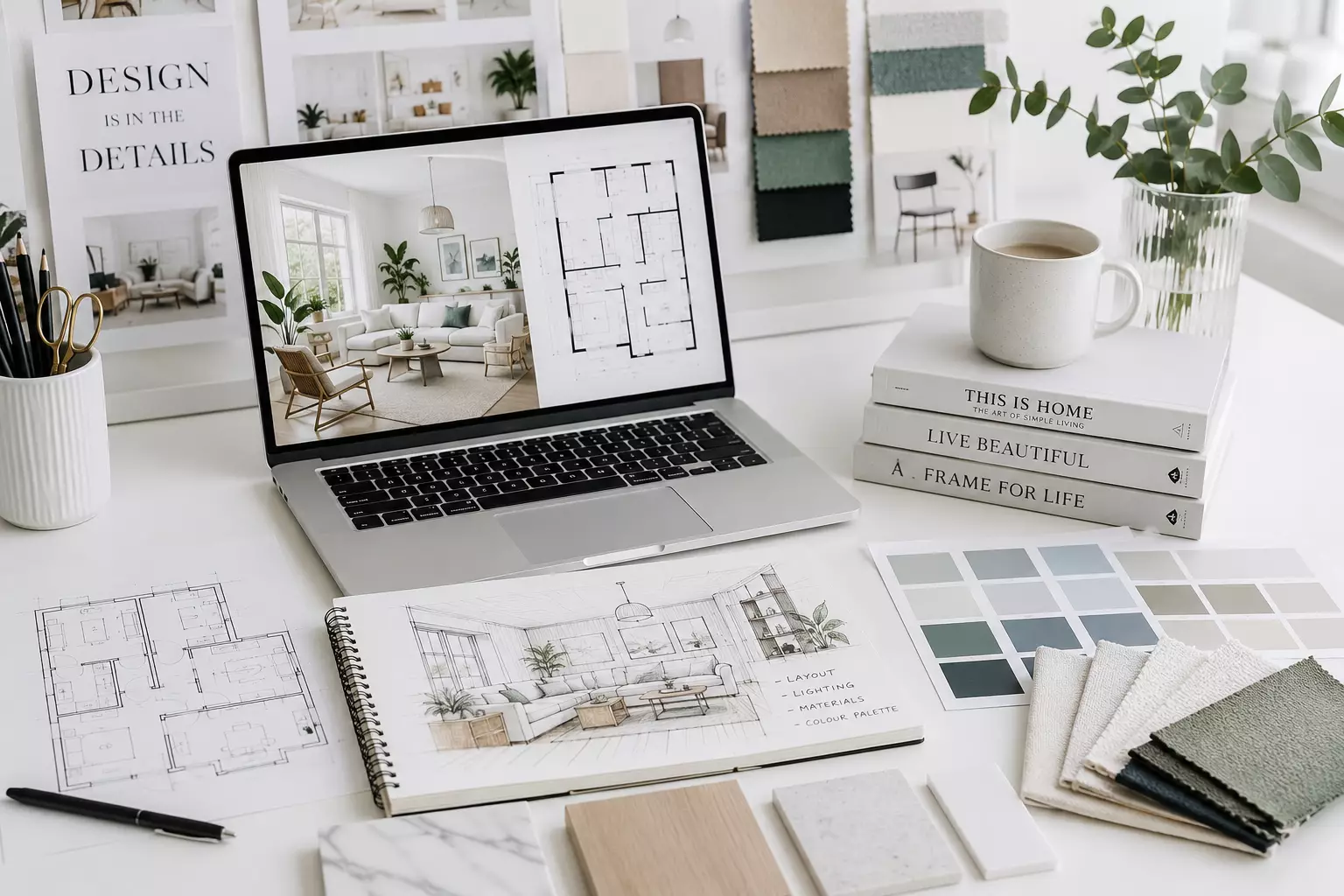
The National Careers Service highlights design knowledge, attention to detail, creativity, construction knowledge, teamwork and confident computer use. Learn space planning, scale, colour, materials, lighting and presentation, and get comfortable with technical drawing and how interiors are actually built. CAD software can be helpful, though keep in mind that depending on the area of design and the level of clients you are working with, you may not need to produce complicated floor plans. CAD skills are often ‘use it or lose it’ so unless you are working with CAD everyday it can be like starting fresh every time you load a program. There are also many online and inexpensive drawing programs and apps that are intuitive and easy to use that can be more suitable for designers just starting out or working with private clients.
You should make sure you assess the likelihood of requiring complicated CAD skills (or if it is more likely you simply need to be able to understand drawings rather than produce them). It is, however, critical to learn the fundamentals of scale and measurement and then you will also be able to apply these skills to your desired CAD/drawing program.
Build a portfolio that shows how you think
Your portfolio should showcase your interior design skills, not just that you can make a pretty image. Include a small number of well-developed projects that walk through the brief, research, concept, space planning, drawings, material choices and final presentation. Student, personal and hypothetical projects are fine when you are starting out. Lead with your strongest work, tailor it to the role you want, and explain your decisions, so a client/employer can see you solving real design problems.
Get practical experience early
Look for small private projects, assist family and friends with designs, showroom experience or interior design assistant roles. The National Careers Service notes that starting as an assistant and progressing with training is one recognised pathway into the interior design industry. Treat early roles as your chance to learn specifications, refine client communication, deadlines and how a project moves from first sketch to finished install.
Apply for roles and keep growing
When your portfolio feels ready, aim for projects that match your level rather than waiting for the perfect job title. Set up a listing on Houzz, have an up-to-date LinkedIn profile, look on social media and forums for people looking for an interior designer, search for interior design assistant and junior designer positions, and tailor your offer and portfolio to each role. Networking through events and suppliers helps you know when opportunities come up.
How to become an interior designer: the steps in short
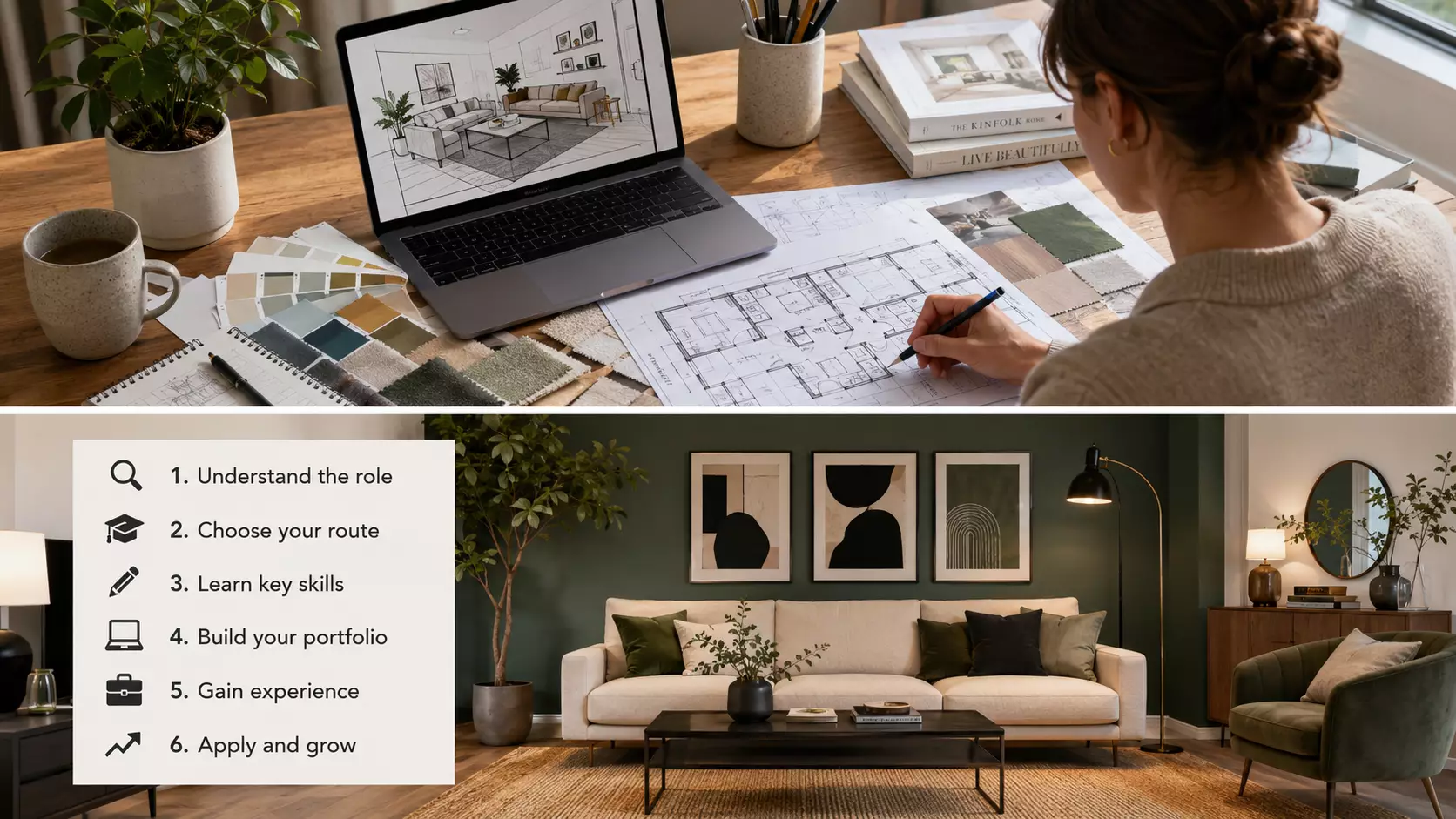
Understand the job, then pick a pathway. Learn the design, technical and soft skills. Build a portfolio that shows your thinking. Gain hands-on experience, apply for projects at your level, and keep growing your skills and contacts.
Frequently asked questions
Do I need a degree to become an interior designer in the UK?
No. Interior design is an unregulated industry. This means that you need not have any professional qualifications or memberships to official (or non-official) bodies or associations to work in the industry.
What skills do I need to become an interior designer?
Creative design ability alongside space planning, understanding technical drawings, colour and materials knowledge, computer skills, attention to detail, communication and people skills.
How do I build a portfolio with no experience?
Create self-directed or course projects from realistic briefs, and show the problem, research, concept, drawings and final presentation. A smaller portfolio with a clear process beats many unrelated finished images.
Ready to turn that love of interiors into a real skill?
The Professional Interior Design Course teaches the craft through course assignments and design briefs, with personal feedback from a professional interior designer and a portfolio to show clients. Study at your own pace, you can take up to one year to complete your coursework, and earn your Diploma of Professional Interior Design and Interior Designer I.D. Pass. Flexible payment plans are available, plus a no-risk 7-day money-back guarantee. Enrol now, or get the free course guide.